
The real problem for homeowners begins when heavy rain starts flooding a basement. A window well drains water coming from heavy rain, snowmelt, or surface runoff away from the window. Windows aren’t meant to withstand water pressure, so water must drain into the ground instead of pooling in a well. Without a window well, or with improper installation, water can accumulate and create hydrostatic pressure against the window and surrounding foundation wall. Basement window well flooding creates moisture in the environment and leads to mold growth. Water seeping through foundation cracks can adversely affect building structure. Homeowners must understand why basement window well flooding is happening so they can stop water entry and prevent the disaster that can follow.
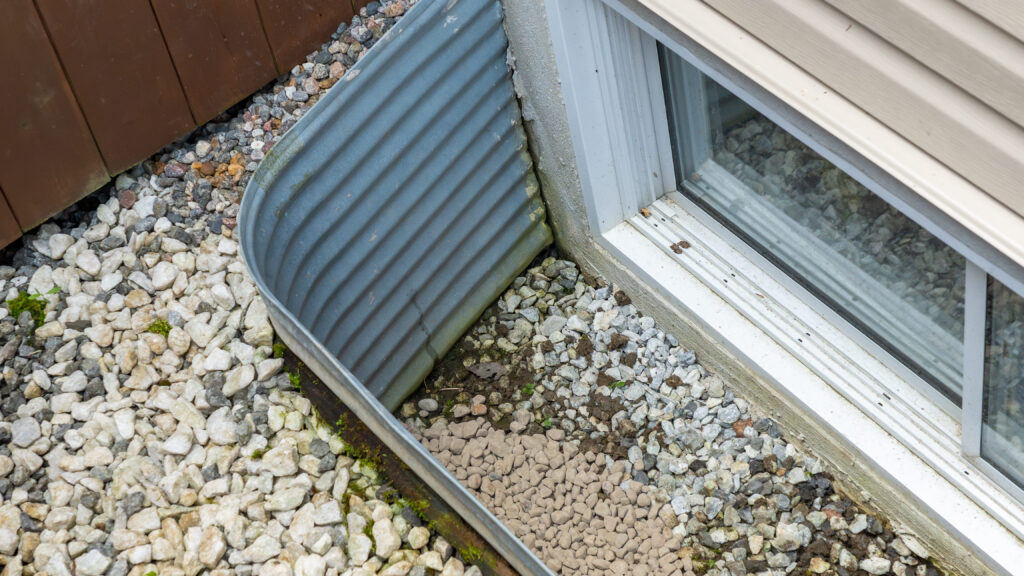
Basement Window Well Flooding
Why Does Basement Window Well Flooding Happen?
Basement window well flooding happens because of an improper window well drainage system, incorrect window well installation, and leaks.
Below are the 4 main causes of basement flooding due to window well issues.
Improper Window Well drainage system
A window well channels water away from the surrounding foundation walls and windows. A window well without a proper drainage system or with clogged drains becomes a collection basin for water. It accumulates water, creating hydrostatic pressure against the window and surrounding basement walls. A clogged drainage system attached to a window well is a major risk, as water has no way out and can enter the basement through wall cracks or damaged window frames.
Incorrect Installation of Window Wells
A window installer must install a window well 4 to 6 inches below the windowsill, and the well must extend 4 inches above grade level. Installing a window well too low prevents surface runoff from draining properly. Many contractors don’t pay enough attention to the window installation process and care less about window well installation. This carelessness results in improper window installation and even the absence of a well. Both situations create problems in the basement during heavy rainfall and snowmelt seasons. Proper sealing of window wells and frames is a must for proper functioning of a well. A missing seal or no seal creates a gap between the window and foundation. This gap becomes an easy entry point for water into the foundation during heavy rain.
Clogged weep holes and vents
When weep holes and vents are clogged, the window well can not drain water properly. Since water is not draining out, its level starts rising in the well, and this overflow seeps inward.
Missing or damaged covers
A window well with a missing or damaged cover lets rain and debris accumulate in the well. Water levels rise until they reach a point where they enter the basement.
How to Stop Water Entry in the Basement?
You can stop water entry in the basement by following 5 preventive measures.
Regrade the landscape
Regrading the landscape is an important measure that helps you move the water away from the foundation. When soil slopes toward the foundation, water channels toward the well and forms a big pool. The purpose of regrading is to ensure water runs off outward instead of pooling near windows.
Improve Window Well Drainage
Improve window well drainage by keeping the drains free from tree leaves, debris and dirt. Regularly clean gutters and the drainage system to ensure window well water drains smoothly. Clear and replace old or clogged drain systems. Drains must connect to foundation drainage and a dry well to channel heavy rainwater smoothly.
Improve Exterior Water Management
Exterior water management reduces water near the foundation and makes certain that window wells do not overflow. Exterior water management requires downspout extensions away from the home while directing roof water away from the window well. Regular gutter cleaning ensures window wells don’t overflow during heavy rain and storms.
Invest in Sealing, covers and repairs
Sealing and protecting the window area helps keep water out of the basement. This is essential when a large gap lets water seep through and into the walls. Proper sealing of window frames and edges prevents water leakage and reduces the risk of mold growth. Replacement of old or cracked frames with new ones also reduces the chances of flooding in the basement. Installing a window well cover keeps debris from building up and clogging the system while guaranteeing smooth drainage.
Spend Money on Basement Maintenance
Basement waterproofing systems help homeowners to control groundwater and protect basement openings. This system is an effective solution when water pressure is high on window wells. Foundational cracks near the window well let water enter easily; homeowners should invest in structural repair. This repair stabilises the foundation and seals the affected areas.
FAQs
What to do when a window well fills with water after rain?
Improve drainage and clear all blockages if the window well fills with water after rain.
What to do when water leaks through the basement windows?
You can seal windows and manage exterior water runoff if water leaks through the basement windows.
What should I do if a window well is still leaking after cleaning it?
You need to install a proper drainage system and control groundwater properly if a window well is still leaking after you clear it.
What to do when moisture spreads inside the basement?
You need to find the source of the leakage around the window well and seal it.


