
Basement waterproofing ultimately comes down to how critical the application is. It will depend on what that basement is being used for. Is it habitable? Is it an inhabitable space? Is it just for storage?
There are a few options depending on how critical the application is, and it really is up to the engineer or whoever is specifying the project to decide what is the more appropriate system.
Good, Better, Best Waterproofing Options
In the product range, there’s that good, better, best type of tiered options when it comes to basement waterproofing.
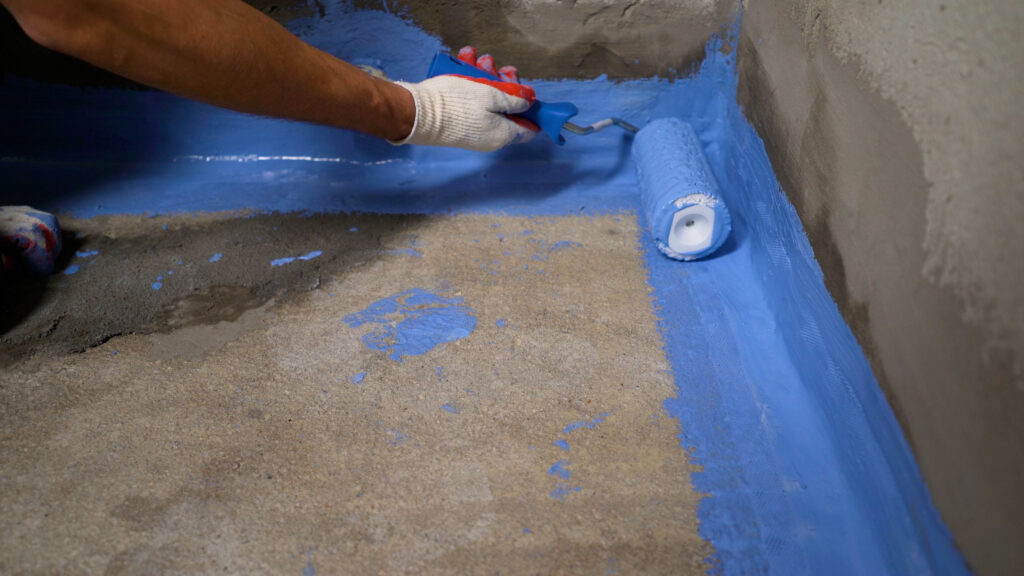
Basement Waterproofing Done Right
Starting with Gripset 51. This is a very popular choice not just for basements but retaining walls as well. It is an OG product. Some advantages over similar products include the 15-liter pail; you get about 10 square meters.
There has been some analysis done with other products out in the market, and if you have a look at the film thickness needed to achieve, some of them are up to 3 mm thick; you only end up getting four to five square meters out of a pail as opposed to the 10 square meters out of the bigger 15 L.
Cementitious Systems Explained
From there, moving up to cementitious-grade products, there are two in that space: the most popular option is C1P, and there’s also the two-component waterproofing membrane. C1P again, priming is simply misting it with water.
There are different application methods with C1P, including roller, brush, spray, and trowel-on applications, with specifications and details on how to apply the product in those different ways.
If you do need to stop, or you need a really low water vapor transmission rate, then you want to move from the C1P to the two-part, and combine that with the E60. Gyms and theater rooms are being installed in basements along with some spare bedrooms.
Why a Premium Membrane Option Exists
This brings the best option in performance, water vapor transmission, and application speed: BRW HD. As far as durability, elongation properties, crack bridging properties, and speed of application, it really does lend itself to below-ground installations, including basements, and it is a perfect match with the Express H2O primer, which can be applied to surfaces that have residual moisture.
Common Basement Waterproofing Problems
One of the main issues when it comes to basement waterproofing, apart from very real safety concerns when a site has not been excavated properly- that’s always something that should be looked out for- is, as far as application goes, dampness or excessive moisture. Generally, if the site has been cut out, there can be underlying moisture issues.
You could be hitting groundwater and all those sorts of things. So preparing the surface and using the right equipment, like pumps and things like that, to keep the area dry is crucial for the success of the waterproofing system.
Limitations of Gripset 51
With Gripset 51, if applied at a cold temperature where there’s not much ventilation, or even colder because of dampness in the substrate or moisture content, prolonged drying is probably the most common issue found with the 51.
These things can be addressed through ventilation and by picking the correct time to apply the product, but sometimes it will reach its limitation, and it is probably worthwhile moving across to a cement-based product.
Benefits and Limitations of C1P
C1P, performance-wise, excellent. It can be applied over a damp surface, but again, if you do need a lower water vapor transmission rate, then you should move on to the two-part combined with the E60 as the priming system.
The limitation for this one, again, at certain temperatures, anything below five, cement will not cure. But it does have a better chance of curing at those colder conditions where there is moisture present than the 51. You do need to mix the product. It is a little bit unique as far as its rheology and the way that it applies. But the benefit of the product is that there are several ways you can apply it, and it’s about finding the application method that suits you best.
Some will only use this product as a trowel-on product; others will use a thick, large brush and brush it on, and it does give a very good finish with that type of application technique as well.
When DIY Reaches Its Limit
At the end of the day, basement waterproofing is just like anything else. You do need to make a set of considerations. You need to understand what the space is being used for. And if you’re the installer or the tradesperson, you should engage with a waterproofing specialist to make sure the right system has been selected, with support and guidance throughout the process when needed.


