Basement waterproofing is the process of protecting a home’s foundation from water. It involves waterproofing methods like interior and exterior to prevent water from entering basement walls, floors, and other joints. In the US, basement waterproofing services has become a $5 billion plus, annual industry across the Mid-Atlantic region like New Jersey, Pennsylvania, and Delaware. These Atlantic regions have high water tables and 45 to 48 inches of annual rainfall that causes hydrostatic pressure in residential basement floors.
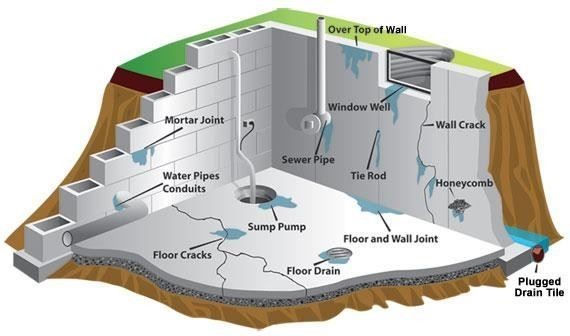
Hydrostatic pressure causes 60 lbs of force per square foot against the basement foundation. A house of average 8-foot basement wall faces approximately 500 lbs of lateral pressure at its base. Water enters through vulnerable points such as floor-wall joints (cove joints), micro-cracks of 0.004 inches, and porous concrete blocks. You see visible warning signs like musty odors, damp walls, mold growth, peeling paint, and structural cracks in your basement.
DryMaster Basement Waterproofing explained
Moisture at the basement reduces a home’s resale value by 15 to 25% and leads to major structural repairs costing from $10,000 to $30,000. It affects indoor air quality up to 40%, as the air inside a home originates from the basement.
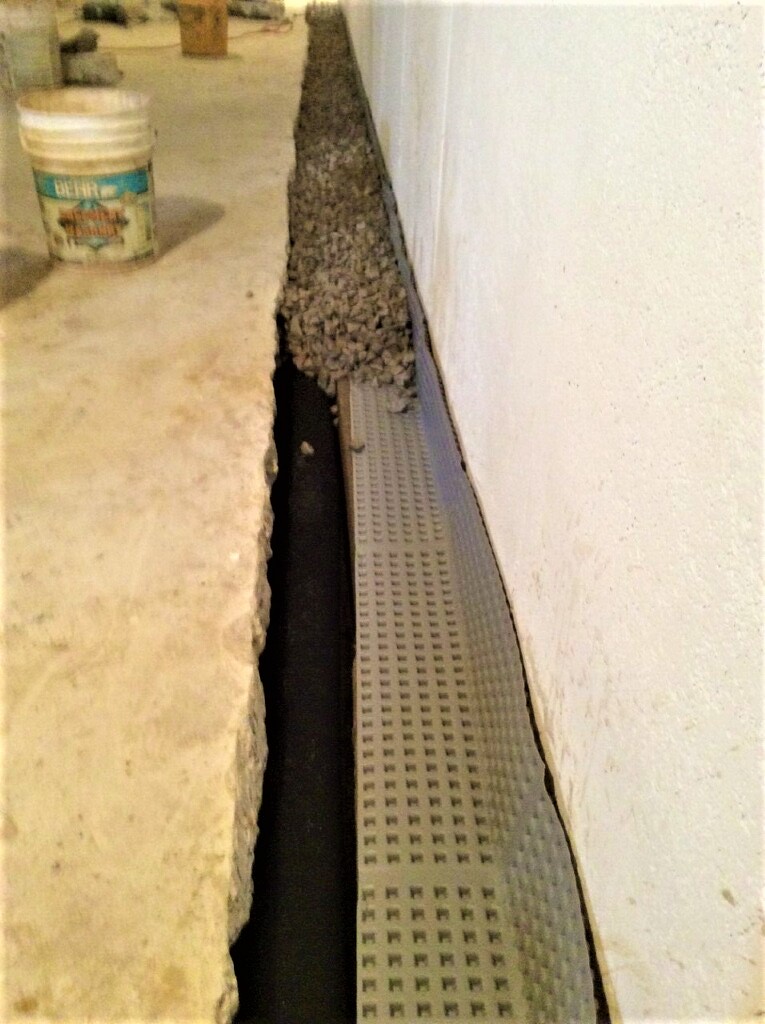
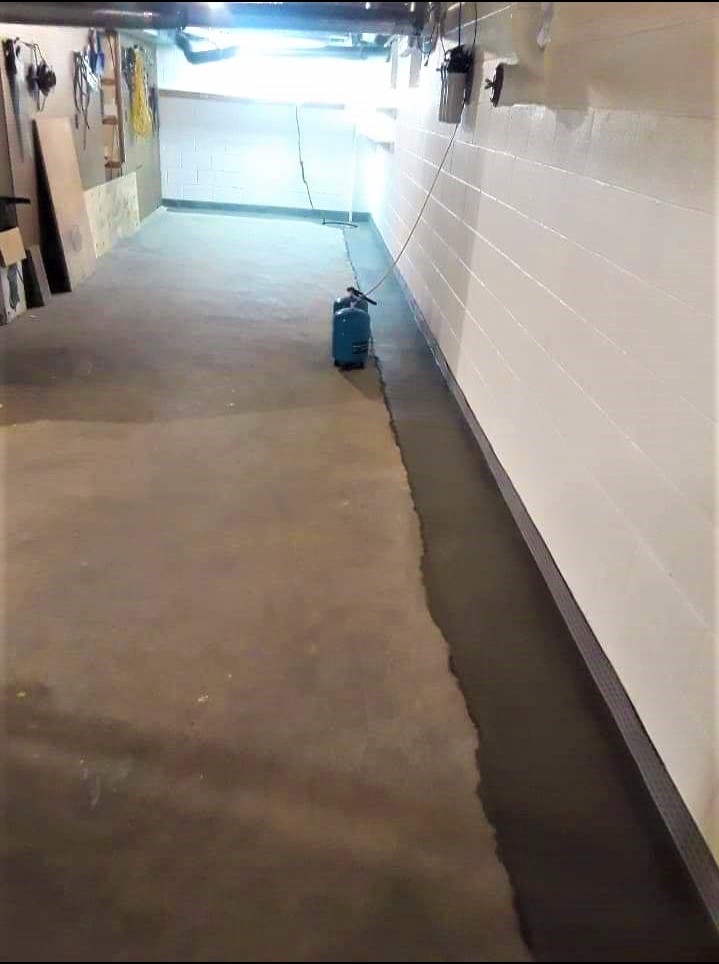
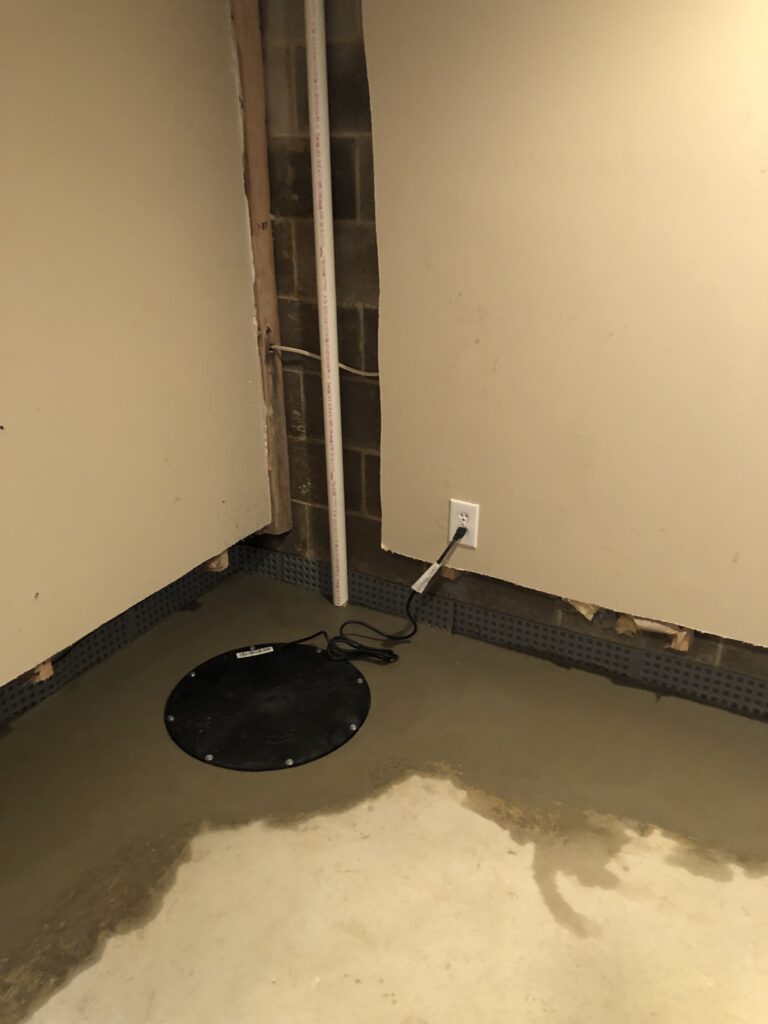
DryMaster Basement Waterproofing fixes these issues through a multi-layered, engineering based approach to relieve pressure and permanently control water intrusion. Our waterproofing process begins with identifying the source of water entry, then implementing solutions such as French drain systems. We install sump pump systems for removing 2,000 to 4,000 gallons per hour.
DryMaster uses vapor barriers and dehumidification systems that reduce humidity levels below 50%, to prevent mold growth. DryMaster protects the foundation with long-term value in an estimated 100 to 125% return on investment (ROI) for homeowners.
What Causes a Wet Basement?
Basement waterproofing is the process of controlling groundwater, rainwater, and moisture from entering a home’s foundation, basement walls, or floors. It uses waterproof techniques like sealants, drainage systems, and sump pumps to control hydrostatic pressure.
We need three types of waterproofing systems to stop water intrusion. These include barrier protection systems, structurally integral and protection of drainage systems.
3 types of Basement waterproofing systems are listed below:
Barrier Protection System:
This type A system blocks water from entering the basement using an impermeable barrier, such as 20-mil high-density polyethylene (HDPE) liners or rubberized asphalt membranes. External barriers require excavation 7 to 9 feet deep, to maintain humidity below 50%.Structurally Integral System:
This type B waterproofing resists water penetration with high-strength concrete of 4,000 to 5,000 pounds per square inch (PSI) through waterbars at basement construction joints. It uses crystalline admixtures that seal 0.1 micrometers cracks or pores.Drained Protection System:
This type C system manages hydrostatic pressure controls by redirecting water. It uses 4-inch Schedule 40 perforated polyvinyl chloride (PVC) French drains, to prevent silt infiltration. The system uses 1/2 HP or 3/4 HP submersible pumps at the basement pit that moves water of 2,500 to 4,000 gallons per hour (GPH).
What is the importance of waterproofing your basement?
Waterproofing your basement is important because it is an investment for both the safety and longevity of your home. Hydrostatic pressure from saturated soil exerts up to 60 pounds of lateral pressure per square foot, which causes foundation cracks, shear wall bowing, and structural damage.
Basement waterproofing maintains your indoor 40% to 50% of air quality that is coming from the basement through the “stack effect.” Maintaining relative humidity (RH) prevents the growth of harmful molds such as Stachybotrys chartarum, which cause respiratory risks and allergies.
Waterproofing adds financial and functional value to your home. A professionally sealed, dry basement yields a 100% to 125% ROI by converting unusable space into functional living areas.
It improves energy efficiency, lowering humidity and reducing strain on Heating, Ventilation, and Air Conditioning (HVAC) systems, which cuts monthly utility costs. Proactive solutions like high-capacity sump pumps or French drains are far more cost-effective than the $10,000 to $30,000 capital expenditure for major foundation repairs or mold abatement.
Why do MidAtlantic regions of the USA need basement waterproofing?
In the Mid-Atlantic region, including New Jersey, Pennsylvania, and Delaware, basement waterproofing is essential due to 42 to 48 inches of annual precipitation. This createshydrostatic pressure of up to 60 PSF per linear foot of saturated backfill against basement walls.
The New Jersey region has high Plasticity Index (PI) clay soils that exert 10% to 15% upward and lateral forces above 2,500 to 3,000 PSI. This pressure causes capillary cracks of 0.02 inches, and hurricanes that cause 5+ inches of rain in 24 hours, lead to rapid basement flooding.
Homeowners in NJ, install Type C sump pumps that move 3,000 to 4,500 gallons per hour. This combination lowers the water table and reduces hydrostatic pressure on the basement floor.
What Are the Primary Causes of Basement Leakage?
The primary causes of basement leakage are due to hydrostatic pressure, poor drainage, foundation cracks, soil movement, sump pump failure, and lateral soil pressure.
Hydrostatic Pressure
Hydrostatic pressure is the main cause of basement leaks. Groundwater enters and pushes the foundation walls that creates a “pressure head”. Water enters through concrete pores, which contain 12% to 18% air by volume and then water exploits the Cove Joint where the floor slab meets the foundation footing.Poor Drainage Systems
Mechanical drainage failures are a common cause of basement flooding. For example, a 1-inch rainfall on a 2,000 sq. ft. roof produces 1,250 gallons of water,which pools around the foundation. To stop water from collecting, the ground should slope 6 inches over the first 10 feet away from the foundation, as recommended by the International Residential Code (IRC). Old homes use Bituminous Fiber (Orangeburg) or clay tile pipes, which get blocked over 30 to 50 years, and causes water to pool near the foundation and results in basement leaks.Foundation Cracks & Structural Failure
Cracks in basement walls allow pressurized groundwater to enter directly. Vertical cracks under 1/16th inch cause minor shrinkage issues, but horizontal cracks is the sign that lateral earth pressure has exceeded the 3,000 PSI tensile strength of masonry. A small 1/8th inch crack allows 15+ gallons of water per minute during thunder storms.The Clay Bowl Effect
This phenomenon occurs when loose, disturbed backfill in the over-dig zone becomes less dense than native soil, creating a high-permeability area that traps water around the foundation. This forms a perched water table that maintains continuous hydrostatic pressure on basement walls even after rainfall stops. Without Type A exterior barriers or Type C drainage relief systems, this condition keeps the foundation constantly wet, and will cause basement leakage.Sump Pump Failure
In Type C (Drained Protection) systems, sump pumps can fail under stress. Standard residential pumps (1/3 to 1/2 HP) are rated for a 10% to 15% duty cycle, and constant use during heavy storms can overheat the motor. A high-capacity pump should move 3,000 to 4,500 gallons per hour at a 10-foot lift. As, 70% of floods occur during power outages, so a 12V deep-cycle battery backup is needed to maintain protection for up to 72 hours.Lateral Soil Pressure
The weight of the earth causes basement leakage. Expansive clays in the Mid-Atlantic expand 10% to 15% when wet, exerting thousands of pounds of pressure. When soil freezes at the 30 to 36 inch frost line in PA and NJ, it lifts or shifts concrete blocks of the basement and causes leaks.
What are the common signs that your basement is leaking?
The common signs your basement is leaking include efflorescence, adhesion failure, oxidation, structural fissures, biological growth, and capillary rising damp. These signs are not random surface issues.
6 warning signs of basement leakage are listed below:
Efflorescence
A crystalline, white alkaline deposit occurs from calcium hydroxide leaching. It happens when groundwater outside your home seeps through concrete. As the water moves inside the wall, it carries salts with it, and when the water evaporates, it leaves this white residue behind. This looks like a white, chalky powder on basement walls or bricks.
If you see white powder, it means water from the surrounding soil is slowly entering your wall and drying out inside.Adhesion Failure
This blistering, saponification, or delamination of coatings caused by hydrostatic pressure or alkali-silica reactions (ASR). This failure happens when groundwater outside your home builds pressure against basement walls and forces moisture through the concrete. That moisture pushes behind paint or waterproof coatings and breaks their bond from the surface. This leads to bubbling, peeling, or flaking of wall finishes.
This looks like paint or waterproof coating that is bubbling, peeling, or coming off in sheets.Oxidation
This Ferrous corrosion happens on lally columns, sill plate anchors, and mechanical plenums. This signals sustained Relative Humidity (RH) above 60%, which degrades structural steel components. This happens when moisture from surrounding soil enters the basement as vapor and stays trapped in the air due to poor ventilation. Over time, this high humidity causes metal parts in your basement to slowly rust and weaken.
This looks like reddish-brown rust on support posts, pipes, or the bottom of appliances like furnaces or water heaters.Structural Fissures
These are mechanical failures caused by lateral earth pressures or soil saturation causing horizontal shear cracks or step-fretting in CMU (block) walls. This happens when rainwater and groundwater collect in the soil around your home and increase pressure on basement walls. As the soil becomes heavier and expands, it pushes against the foundation and causes cracks over time.
This looks like long horizontal cracks or stair-step cracks in concrete block walls.Biological Colonization
Proliferation of hyphae and mycotoxins (e.g., Stachybotrys) at the cove joint is the sign of chronic moisture accumulation. This occurs when groundwater moisture enters the basement and stays trapped in dark, damp areas with little airflow. The constant moisture creates the perfect environment for mold and fungi to grow at the base of walls where water first collects.
This looks like black, green, or slimy patches and a strong musty smell, near the floor-wall corner.Capillary Rising Damp
This sign confirms the absence or failure of a capillary break at the basement footing level. This happens when water from the soil below your home is pulled upward through tiny pores in concrete, similar to how a sponge absorbs water. It moves upward slowly without visible leaks or flooding.
This looks like dark damp stains or “tide lines” rising from the basement floor up the wall.
They are diagnostic indicators of subsurface water infiltration, meaning moisture is entering through foundation walls or floors due to hydrostatic pressure, poor drainage, or porous concrete. Identifying these early helps prevent structural damage, mold growth, and long-term repair costs.
What damages are caused by the wet basement?
The damages caused by a wet basement include foundation instability, structural decay, HVAC inefficiency, biological infestation, material degradation, and electrical hazards.
You will face 6 types of damages that are due to the wet basement.
- Foundation Instability: Basement instability occurs when sustained hydrostatic pressure and soil saturation build up around the foundation. It leads to differential settlement, lateral loading, shear cracks, wall rotation, and reduced footing load-bearing capacity. It keeps pushing your basement walls until cracks and movement start appearing.
- Structural Decay: Basement moisture causes lignocellulose degradation (rot) in wooden sill plates and floor joists. In concrete it triggers carbonation and rebar oxidation. This creates internal expansion that causes spalling and section loss. Wood starts rotting and concrete starts breaking from inside due to long term moisture exposure.
- HVAC Inefficiency: High latent heat load increases indoor air enthalpy, which forces HVAC systems to run longer for dehumidification. This causes short-cycling, bearing wear, and higher kWh consumption. It uses more electricity, and causes HVAC failure.
- Biological Infestation: When water activity stays above 0.70, it enables colonization of toxigenic fungi like Stachybotrys and Penicillium, along with xylophagous insects such as subterranean termites. This constant dampness inhibits mold growth and termite infestation.
- Material Degradation: Hydrostatic vapor drive causes osmotic delamination of floor coverings and hydrolysis of adhesives. Fibrous insulation gets capillary saturation, to permanent R-value loss. This means floors start peeling, glue weakens, and insulation stops working properly once it absorbs moisture.
- Electrical Hazards: Moisture on high-voltage components causes galvanic corrosion, insulation breakdown, and arc-faulting. This increases the risk of electrical fires and system failure. Water in a basement damages wiring and creates serious fire risks.
What are the primary methods for basement waterproofing?
The primary methods for basement waterproofing include exterior basement waterproofing and interior basement waterproofing. These two approaches are classified based on where the water problem is addressed.
Exterior waterproofing blocks water at the source before it enters the foundation, while interior waterproofing manages and redirects water that has already penetrated the structure.
Exterior Basement Waterproofing (Type A – Barrier Protection)
The exterior basement waterproofing system works by stopping water before it enters the foundation. It starts with excavation down to footing depth so the full exterior wall is exposed for treatment. The substrate is then prepared using structural parging on CMU or concrete to remove honeycombing and create a smooth, monolithic surface for proper adhesion.
A waterproof membrane such as fluid-applied polymer-modified bitumen or a 60-mil HDPE sheet is installed to form a continuous impermeable barrier against liquid water.
Then a perimeter drainage system using 4-inch perforated HDPE or PVC pipe bedded in clean #57 washed stones are placed to collect groundwater and redirect it away from the structure through gravity flow.Interior Basement Waterproofing (Type C – Drained Protection)
The interior foundational waterproofing system manages water that has already entered or is building pressure around the foundation. It begins with hydrostatic pressure relief by breaking the floor perimeter at the cove joint, where the wall meets the footing, to intercept incoming water.
Then a sub-floor drainage system is installed using 4-inch perforated PVC pipes with a minimum 1% slope to collect and channel groundwater infiltration toward a sump basin. A vapor barrier or HDPE dimpled wall liner is fixed to the interior walls to capture seepage and direct it into the drainage track.
Finally, a sump pump discharge system using 1/2 HP or 3/4 HP submersible pumps removes collected water through a discharge line with a check valve to prevent water backflow.
Why should you choose DryMaster for your NJ basement and crawl space leakage solutions?
You should choose DryMaster because we deliver a complete engineered waterproofing system that combines hydro-pressure relief, mechanical discharge, vapor control, wall protection, and structural remediation. It is for Atlantic regions like New Jersey’s expansive clay soils, heavy rainfall, and foundation stress conditions.
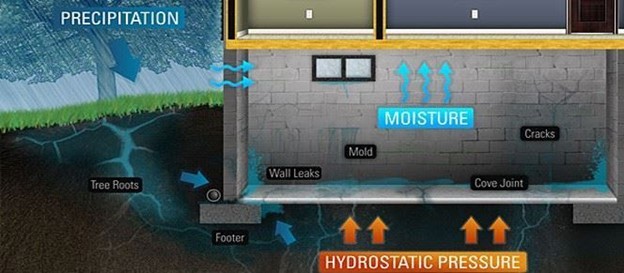
Our solutions are not isolated fixes; they work together as a single integrated system to control hydrostatic pressure, manage moisture movement, and restore long-term structural stability.
Holistic Basement & Crawl Space Solutions
- Advanced Hydro-Pressure Relief
We install a 4-inch perforated PVC sub-floor drainage system bedded in 3/4-inch clean washed stone. This lowers the water table beneath the slab and prevents advective flow (water migration through concrete), reducing hydrostatic pressure at the foundation level. - High-Volume Mechanical Discharge
We use 1/2 HP and 3/4 HP submersible pumps with 2,500–4,500 GPH capacity. Each system includes dual check valves and battery backup for power failure conditions, ensuring continuous water evacuation during heavy storms (5+ inches in 24 hours). - Vapor Management (Crawl Space Control)
We install 20-mil antimicrobial vapor barriers with heat-welded seams to fully encapsulate the ground surface. This creates a capillary break and maintains Relative Humidity (RH) between 40%–50%, reducing stack effect and preventing toxigenic fungi like Stachybotrys. - Encapsulation (HVAC Protection)
We encapsulate HVAC ductwork in crawl spaces by isolating it from ground moisture and humid air. This prevents condensation, microbial growth, and thermal loss, while ensuring damp air does not migrate into the living space. - Integral Wall Protection
We install HDPE dimpled wall liners that intercept foundation seepage and direct it into the drainage track. This controls lateral vapor drive and keeps basement walls dry and protected from surface deterioration. - Structural Remediation
We repair horizontal shear cracks and efflorescence using structural parging and high-strength concrete mixes (up to 5,000 PSI). This restores foundation integrity and prevents further moisture-related structural degradation.
Why is DryMaster Best for New Jersey Conditions?
DryMaster is best for NewJersey residents for basement leakage solutions because of following reasons:
- DryMaster is designed for New Jersey clay soils (10%–15% swell), using 5,000 PSI concrete and crystalline additives for stronger foundations.
- Systems handle heavy NJ storms with 3,000–4,500 GPH drainage capacity for rainfall over 5 inches in 24 hours.
- We install Type C drainage using 4-inch Schedule 40 perforated PVC in washed stone for better hydrostatic pressure relief.
- Encapsulation keeps humidity at 40%–50% to reduce vapor drive and prevent mold growth.
- Basement waterproofing improves usable space and can deliver 100%–125% ROI through added property value.
- Systems include backup pumps, alarms, and check valves for protection during power failures and storms.
What process DryMaster uses to Solve Your Basement waterproofing Issues?
The step by step process DryMaster uses is a structured engineering workflow that starts with inspection and ends with a complete waterproofing or structural solution based on the actual site condition.
- Free Expert-Led Inspection
The process starts with a free on-site inspection, where Bud Lauria himself examines the structure. We use moisture meters and thermal imaging to identify active water entry points, hidden damp zones, and moisture movement inside the basement and foundation. - Problem Identification (Root Cause Analysis)
After inspection, the expert directly analyzes the root cause of water intrusion. This includes checking hydrostatic pressure, lateral soil pressure, drainage failure around the structure, or structural cracks that cause seepage. - Engineering Diagnosis and Planning
Based on findings, the expert designs a customized solution plan. This step is not generic, it is based on real site conditions and according to your house structure.
- Only Waterproofing System
If the issue is minor dampness or vapor intrusion, a waterproofing barrier system is selected to block moisture entry and control humidity. - Waterproofing + Drainage System
If groundwater pressure is high, waterproofing is combined with a drainage system. In such cases, a French Drain system is installed to collect and redirect water away from the foundation using controlled drainage and sump pumping. - Waterproofing + Crack Repair
If leakage is coming through structural cracks, waterproofing is combined with professional crack repair techniques such as epoxy or polyurethane injection to seal water pathways permanently. - Full Foundation Repair
If the foundation is structurally weak or moving, full repair is required, including footing foundation strengthening and stabilization to restore structural integrity and load-bearing capacity.
- Only Waterproofing System