
New Jersey experiences heavy seasonal rains, melting snow, and high-water tables. The issue with these conditions is that they can end up causing significant water intrusion.
In fact, this is one of the most common and frustrating problems that homeowners face here.
Left unaddressed, this moisture can result in mold growth and foundation damage. It can also lead to costly repairs.
Such shortcomings can be quite overwhelming to deal with. Therefore, you definitely don’t want to encounter them.
It therefore makes sense to be proactive and look for a proper solution. When it comes to this, nothing does it better than a French drain installation. This article looks at how it stops water intrusion.
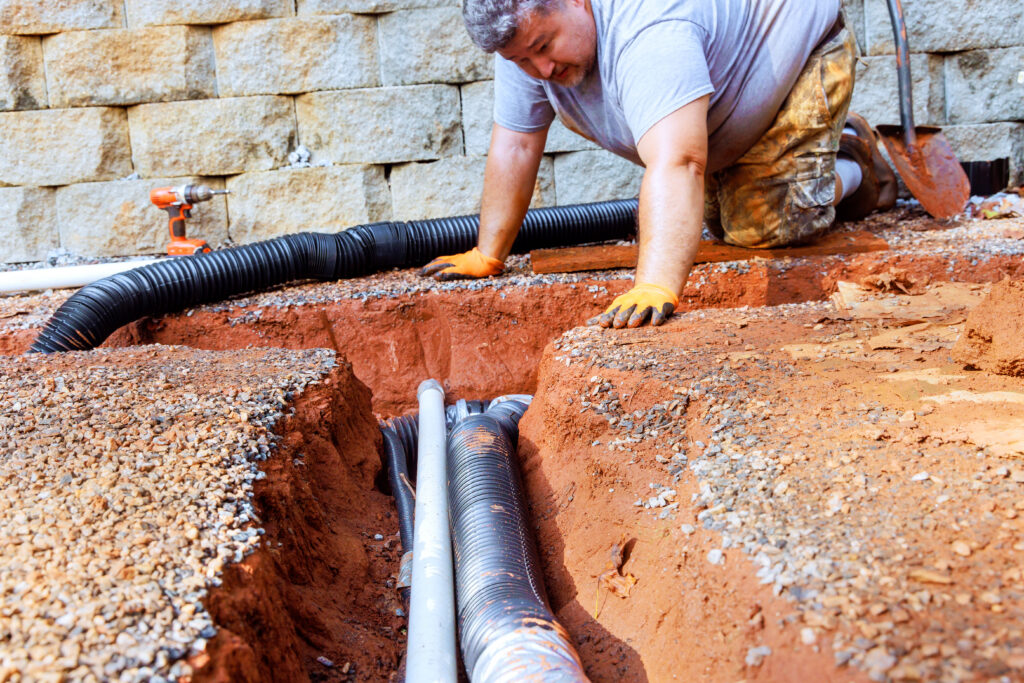
French Drain Installation In South Jersey
Why Water Intrusion is Common in New Jersey Homes
The region experiences frequent heavy rainfall, snowmelt, and fluctuating groundwater levels. These conditions tend to place too much pressure on foundations.
Another thing to note is that many properties sit on clay-heavy soil. Such soil expands when saturated and contracts as it dries. This creates repeated stress on foundation walls and slabs. Over time, this movement can cause small cracks and gaps. When this happens, the openings will definitely allow water to seep inside.
Additionally, if you have an older home, you are more than likely to experience water intrusion. This is because traditional construction often lacks modern drainage or proper grading. It’s hence quite hard for excess water to move away from the structure.
How a French Drain System Works
It works by redirecting excess water away from the foundation. This is way before it can seep inside and cause damage.
A shallow, sloped trench is made around the problem area. It’s then lined with gravel to ensure efficient flow. Inside the trench, there is a perforated pipe. It’s placed in a way that it can collect groundwater as it rises through the soil.
This design allows water to enter the pipe via small openings. This means that it won’t have to press against the foundation walls.
Water gathers inside the pipe and is then guided toward a safe discharge point. This can be a dry well or storm outlet.
Interior vs. Exterior French Drain Installation
When it comes to managing drainage, you’ll need to choose between interior and exterior systems. Your choice between the two will highly depend on the source of your problem and the desired outcome.
Exterior drains are usually placed around the perimeter. Here, they are able to capture runoff before it reaches the foundation. They then direct it away in a safe manner.
On the other hand, interior solutions handle moisture that has already entered your home. This can be in the basement or crawl space. They then channel it toward a sump pump or any other exit point.
Each approach has its own pros and cons. For instance, exterior systems are considered proactive. This is because they prevent damage before it even happens. On their part, interior systems offer a reliable way to protect living spaces from persistent dampness.
Signs Your Home Needs a French Drain
You may notice that your yard stays soggy after rain. You could also find puddles forming near your foundation. Such signs can indicate that you are dealing with poor drainage.
Other indicators include cracks in your basement walls or a musty smell in the lower levels of your home. You may also see that soil seems to wash away after storms. Even persistent damp spots can signal that your property is having issues managing runoff effectively.
It’s very important that you address these issues early. One way to do this is to install a French drain. With a good one, you get to prevent serious structural problems. This goes a long way in protecting your investment.
French drain installation remains one of the most effective solutions for protecting your home from water intrusion. As a homeowner in New Jersey, you probably already know about the heavy rainfall and heavy clay soils that make proper drainage essential. Failure to protect your home can end up causing water intrusion. Excess water can be quite detrimental as it can cause structural damage and long-term moisture problems.
Since you don’t want such shortcomings, it makes sense to be proactive. With a professionally installed French drain, you are able to redirect excess water safely from your home. This goes a long way in keeping your home dry year-round.
Looking for French drain installation services in New Jersey? Consider partnering with us. At Dry Master Waterproofing, we offer tailored French drain installation solutions. Courtesy of our exceptional services, we can help protect your property’s value and improve indoor air quality. You can therefore have the needed peace of mind during every storm season.


